
Table of Contents
ToggleWhy Web Development Is Important for All Businesses in 2026
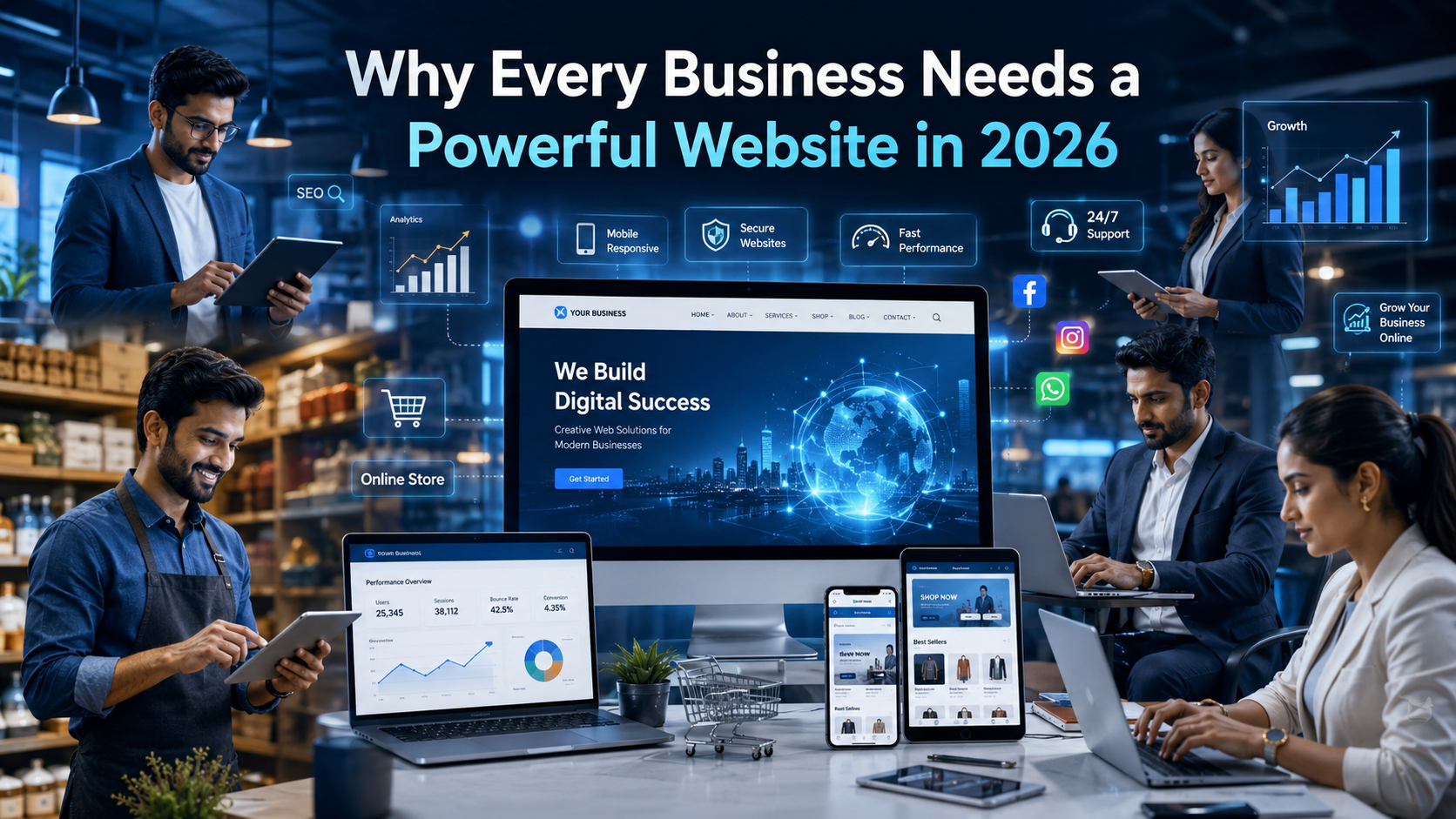
A business without a professional website in 2026 is losing visibility, trust, and potential customers every day. People now search online before making buying decisions, whether they need a local service, an online store, or a company they can trust. A well-developed website works as a digital storefront that helps businesses attract leads, explain services, build credibility, and generate sales 24/7.
Web development is no longer only about design. Modern websites must be mobile-friendly, fast-loading, secure, SEO-optimized, and built for user experience. Businesses in India are rapidly moving online because customers expect instant access to information, reviews, pricing, and support. From startups to established companies, every brand now needs a strong online presence to stay competitive.
This guide explains why web development matters in 2026, how businesses can build effective websites, and what strategies help companies grow online successfully.
The Digital Shift in 2026: Why Every Business Needs a Website
The business landscape in India has changed completely over the last few years. Customers now compare services online before contacting any company. A professional website gives businesses visibility, trust, and control over their online presence. It allows companies to showcase products, answer customer questions, collect leads, and appear in Google searches.
In 2026, websites are not optional marketing assets. They are business infrastructure. Whether someone runs a local shop, startup, consultancy, or enterprise company, a website helps attract customers continuously. Businesses without websites often depend only on social media platforms, which limits long-term growth and search visibility.
A properly developed website also improves credibility. Most users now judge a business within seconds based on website quality, speed, and mobile experience.
How Consumer Behavior Has Changed Toward Online-First Businesses
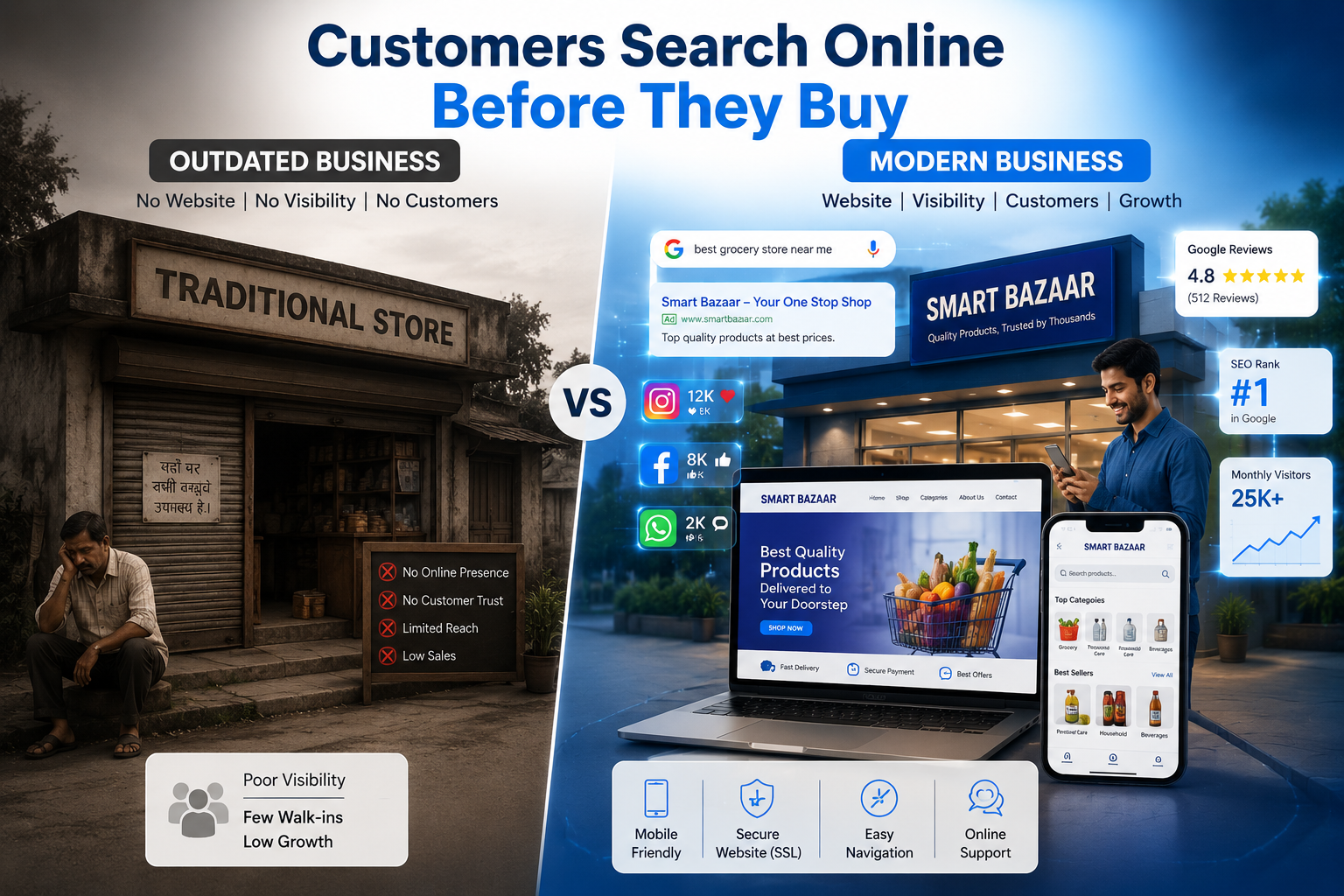
Customers now expect businesses to exist online before they trust them. In India, smartphone usage and internet accessibility have increased dramatically, making online research part of everyday buying behavior. Before contacting a company, people usually search Google, read reviews, compare competitors, and visit websites.
This shift has changed how businesses attract customers. A modern consumer wants quick answers, fast-loading pages, clear pricing, service details, and mobile-friendly navigation. If a business cannot provide this online experience, users move to competitors immediately.
Many industries have already adapted to this trend. Restaurants accept online bookings, doctors provide appointment systems, and local stores offer product catalogs through websites. Even service-based businesses such as consultants, lawyers, and real estate agencies depend heavily on web presence for lead generation.
Search visibility also plays a major role in customer decisions. Businesses appearing on Google with professional websites are seen as more reliable than businesses that only use social media pages.
Why Businesses Without Websites Are Losing Customers and Trust
A business without a website often appears outdated or unreliable in 2026. Consumers want proof that a company is genuine, active, and professional. When users cannot find a business online, they usually choose competitors with better digital visibility.
Trust is one of the biggest reasons web development matters. A website gives customers access to important information such as company background, services, testimonials, contact details, FAQs, and policies. This transparency builds confidence before a customer even speaks with the business.
Another major problem is discoverability. Without a website, businesses miss organic Google traffic from users actively searching for products or services. Social media alone cannot replace search engine visibility because users search Google with strong buying intent.
Businesses without websites also struggle with branding consistency. A website allows companies to fully control messaging, visuals, customer experience, and lead generation systems instead of depending on third-party platforms.
The Real Cost of Ignoring Web Development in 2026
Ignoring web development affects more than online appearance. It directly impacts customer acquisition, revenue growth, and brand authority. Businesses that delay investing in websites often lose long-term market share to digitally active competitors.
Poor or outdated websites also create financial losses. Slow-loading pages increase bounce rates, weak mobile design reduces conversions, and technical SEO issues prevent Google rankings. Customers leave quickly when websites feel unprofessional or difficult to use.
Another hidden cost is advertising inefficiency. Businesses spending money on Google Ads or social media campaigns without optimized landing pages waste marketing budgets because visitors do not convert properly.
Security risks are equally important. Old websites without updates become vulnerable to hacking, malware, and data breaches. Customers expect secure browsing experiences, especially for payments or inquiry forms.
In competitive industries across India, businesses with modern websites are consistently generating more inquiries, stronger branding, and higher customer retention than businesses with limited online presence.
What Makes a Modern Business Website Successful Today
A successful business website in 2026 must balance design, performance, SEO, and user experience. Modern websites are expected to load quickly, work smoothly on mobile devices, provide easy navigation, and answer user questions clearly.
Businesses also need websites that support lead generation and conversions. Strong calls-to-action, inquiry forms, live chat, service pages, and customer trust signals are essential elements today.
Search engines now prioritize websites that deliver real value and positive user experiences. This means technical optimization, useful content, and accessibility are just as important as visual design. A website should not only look good; it must help users take action quickly and efficiently.
Essential Features Every High-Converting Website Must Include
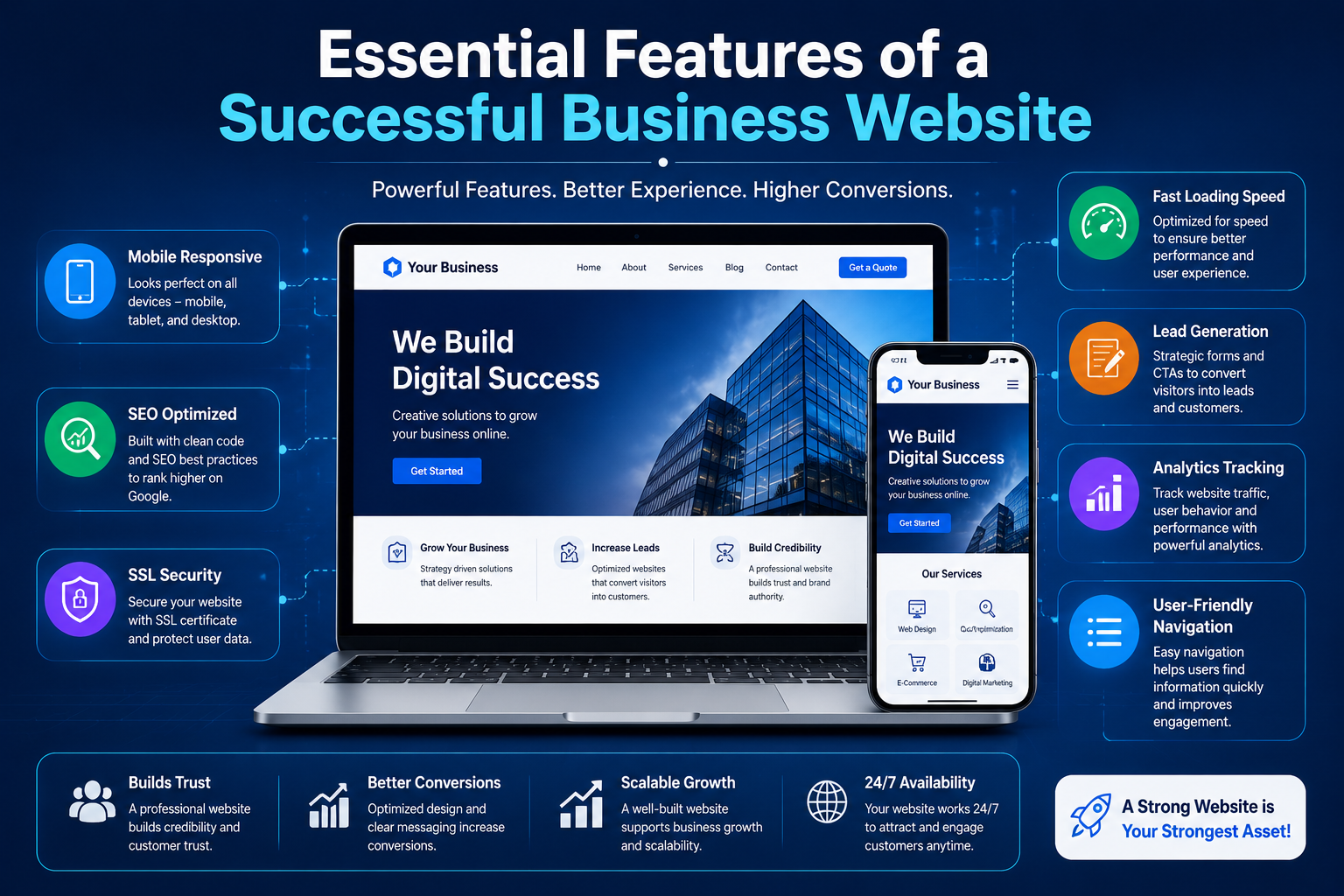
A high-converting website helps visitors become customers by making the experience simple, fast, and trustworthy. Businesses in 2026 need websites that focus on usability instead of unnecessary visual effects.
Some essential website features include:
- Mobile-responsive design
- Fast page loading speed
- Clear service pages
- Simple navigation menus
- Contact forms and call buttons
- SSL security certificates
- Customer reviews and testimonials
- SEO-friendly page structure
- Clear calls-to-action
- Google Maps integration for local businesses
Trust signals are especially important for conversion rates. Users want to see real company information, reviews, certifications, and transparent contact details before making decisions.
Another important feature is content clarity. Visitors should understand what the business offers within seconds of landing on the website. Confusing layouts or excessive information often reduce conversions significantly.
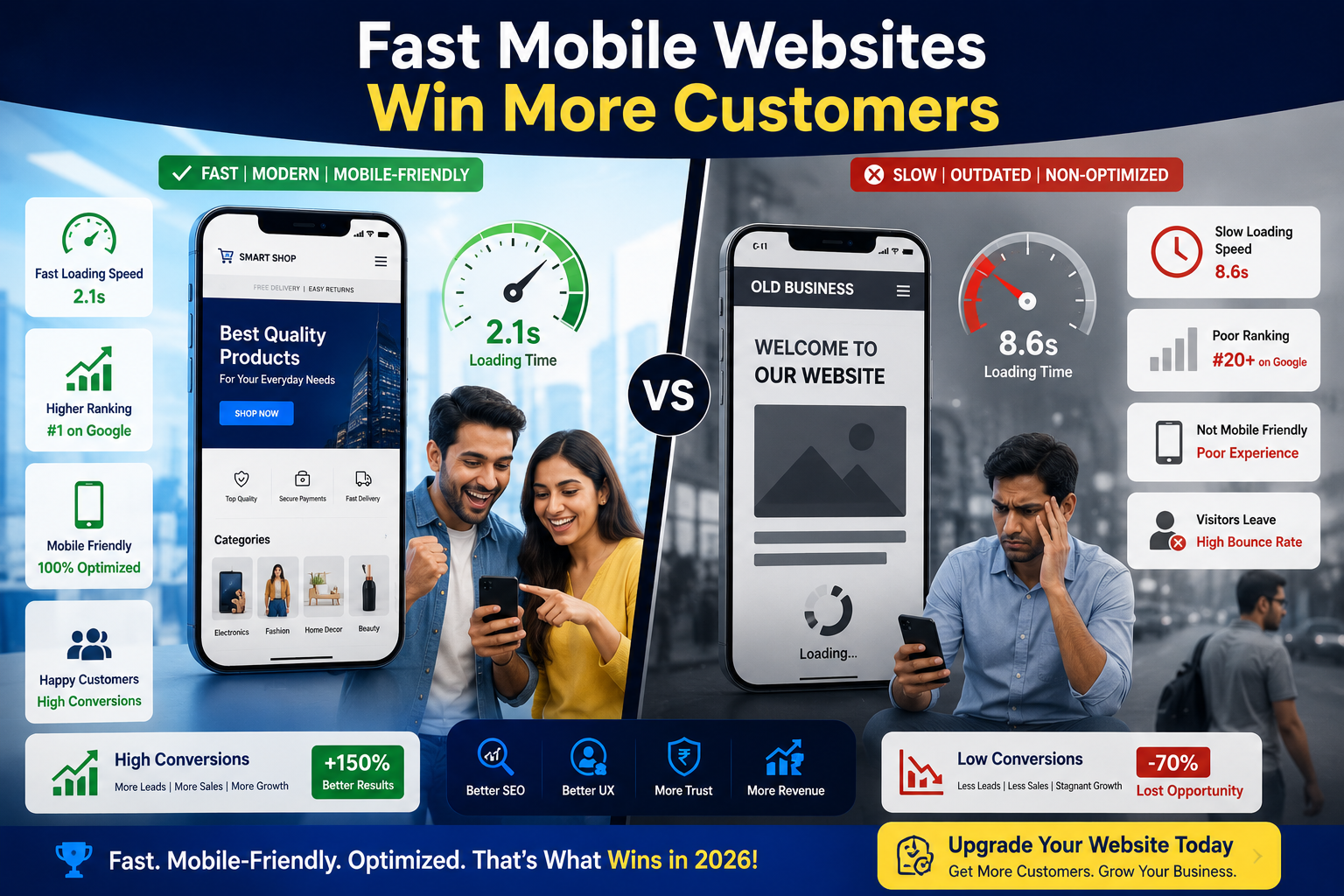
Why Mobile Optimization and Speed Matter More Than Ever
Mobile traffic now dominates internet usage in India. Most users browse websites directly from smartphones, making mobile optimization critical for business growth. A website that works poorly on mobile devices loses visitors almost instantly.
Google also uses mobile-first indexing, meaning search rankings depend heavily on mobile website performance. If text is difficult to read, buttons are too small, or pages load slowly, rankings and user engagement both suffer.
Website speed affects customer behavior directly. Research consistently shows that users abandon websites that take too long to load. Fast websites improve user experience, conversion rates, and SEO performance.
Here is a simple comparison:
Website Performance Factor | Fast Mobile Website | Slow Non-Optimized Website |
User Experience | Smooth and easy | Frustrating |
Bounce Rate | Lower | Higher |
Google Rankings | Better | Poor |
Conversion Rate | Higher | Lower |
Customer Trust | Strong | Weak |
Businesses investing in mobile optimization gain a major advantage in both customer satisfaction and search visibility.
How AI, SEO, and User Experience Influence Website Rankings
Search engines now evaluate websites based on user satisfaction and content quality rather than only keywords. AI-driven ranking systems analyze how users interact with websites, including bounce rates, engagement time, and page usability.
SEO and web development now work together closely. A visually attractive website without technical SEO often struggles to rank. Similarly, an SEO-optimized website with poor user experience also performs badly.
Important ranking factors in 2026 include:
- Core Web Vitals performance
- Mobile usability
- Content relevance
- Secure browsing experience
- Structured data implementation
- Clear website architecture
- Helpful user-focused content
AI-powered search systems such as ChatGPT, Gemini, and Google AI Overviews prefer content that provides direct answers with organized formatting. Businesses must therefore create websites that are easy for both users and search engines to understand.
Good user experience also improves trust. When visitors can quickly find information, navigate easily, and interact without confusion, websites naturally perform better in search rankings and conversions.
How to Start a Website Business and Build a Profitable Online Presence
Starting a website business in 2026 offers major opportunities because companies increasingly depend on digital services. Entrepreneurs can build profitable businesses through eCommerce stores, service websites, affiliate platforms, educational portals, or niche content websites.
The key to success is solving a specific problem for a targeted audience. Instead of creating generic websites, successful businesses focus on clear positioning, strong branding, and SEO-driven growth strategies.
A website business also provides scalability. Unlike physical businesses limited by location, websites can reach customers across India and globally. With proper planning and web development, businesses can automate lead generation, customer communication, and sales processes effectively.
Step-by-Step Guide on How to Start a Website Business in 2026
Starting a website business requires strategic planning instead of only purchasing a domain name. Businesses that grow successfully usually begin with clear market research and audience understanding.
A practical process includes:
- Select a profitable niche
- Identify customer problems
- Choose a business model
- Register a domain name
- Purchase reliable hosting
- Build an SEO-friendly website
- Create valuable content
- Optimize for mobile users
- Set up analytics tracking
- Start marketing through SEO and social media
Many beginners focus only on website design and ignore content strategy. However, long-term growth depends heavily on search visibility and user trust.
Businesses should also prioritize simple navigation and fast-loading pages from the beginning. Technical issues during early stages can negatively affect rankings and customer retention later.
Choosing the Right Niche, Domain, and Hosting for Growth
The foundation of a successful website business starts with smart niche selection. Businesses that target specific industries or customer groups often achieve faster growth than broad, unfocused websites.
A strong domain name should be:
- Short and easy to remember
- Relevant to the business
- Simple to spell
- Brand-friendly
- Preferably include business-related keywords naturally
Hosting quality is equally important because website speed and uptime affect both SEO and user experience. Cheap hosting services often create slow websites, downtime issues, and security risks.
Businesses expecting future growth should choose scalable hosting providers with strong customer support and security features. Investing in reliable hosting early prevents major technical problems later.
Domain authority and brand recognition also improve over time, making early planning extremely valuable for long-term digital success.
Common Mistakes New Website Businesses Should Avoid
Many new website businesses fail because they focus on appearance instead of functionality, SEO, and customer needs. One of the biggest mistakes is launching websites without understanding user intent.
Common mistakes include:
- Ignoring SEO during development
- Using slow or poorly coded themes
- Creating confusing navigation structures
- Publishing thin or duplicate content
- Neglecting mobile optimization
- Not adding trust-building elements
- Avoiding analytics tracking
Another major problem is unrealistic expectations. Websites rarely generate immediate traffic without consistent SEO and content strategies. Businesses must invest time in optimization and user experience improvements.
Security negligence is also risky. Failing to update plugins, themes, or software can lead to hacking issues that damage credibility and search rankings.
Businesses that focus on long-term quality, customer trust, and technical performance usually achieve stronger online growth over time.
How to Open a Company Website That Builds Credibility and Sales

A company website should do more than display basic business information. It must establish trust, communicate expertise, and guide visitors toward taking action. Businesses in India increasingly depend on websites as primary sales and lead-generation channels.
The best company websites combine professional design, clear messaging, SEO optimization, and conversion-focused layouts. Customers should immediately understand what the business offers and why they should trust it.
A well-developed company website also supports branding consistency across search engines, advertisements, and social media platforms. This creates a professional image that strengthens customer confidence and improves conversion rates over time.
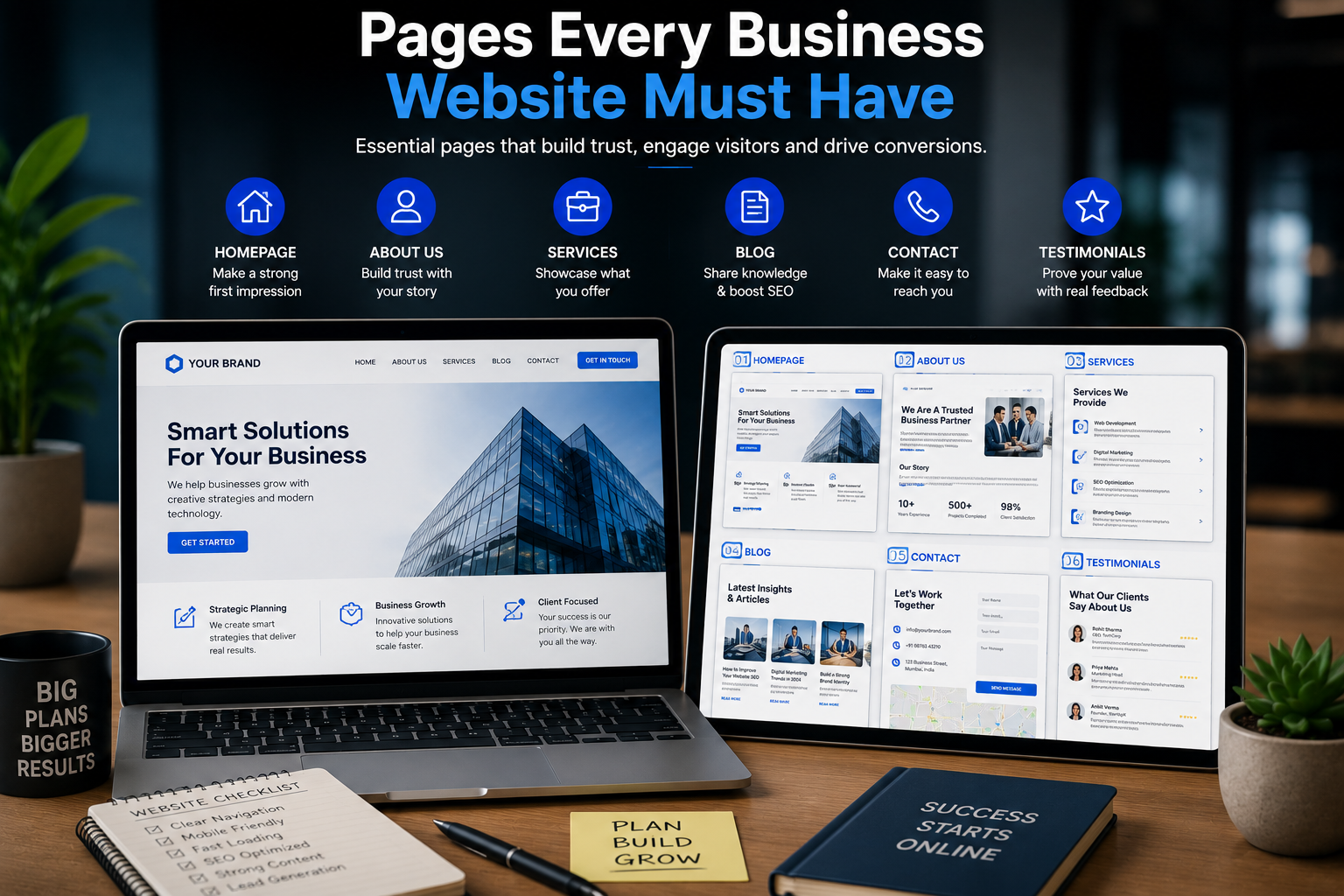
Key Pages Every Professional Company Website Should Have
Every company website needs a structured layout that helps visitors quickly access important information. Missing pages often reduce trust and create confusion for potential customers.
Essential website pages include:
- Homepage
- About Us page
- Services or Products page
- Contact page
- Blog section
- Testimonials or Reviews page
- Privacy Policy and Terms pages
- FAQ section
The homepage should clearly explain the business value proposition within seconds. Service pages should focus on solving customer problems instead of only describing features.
The About page is another trust-building asset. Customers prefer businesses that share company background, experience, and mission clearly.
Adding FAQs also improves user experience and supports voice-search optimization because many users search using conversational questions in 2026.
Branding Strategies That Make Your Business Look Trustworthy
Website branding directly influences customer trust and purchase decisions. Professional branding creates consistency across visuals, messaging, colors, typography, and customer communication.
Businesses should maintain:
- Consistent logo placement
- Professional color schemes
- Easy-to-read fonts
- Clear messaging tone
- High-quality visuals
- Authentic customer testimonials
Trust is built through clarity and transparency. Visitors should easily find contact information, company details, and customer support options.
Another important factor is content quality. Poor grammar, outdated information, or low-quality images can damage credibility instantly.
Businesses should also avoid overly aggressive sales messaging. Modern consumers prefer informative, user-focused websites that educate before selling.
Strong branding not only improves conversions but also increases customer recall and long-term loyalty in competitive digital markets.
How Local Businesses Can Compete Online Using Smart Web Design
Local businesses in India can compete effectively against larger brands through strategic web development and local SEO optimization. Smart web design helps smaller companies build trust and improve visibility within targeted geographic areas.
Important strategies include:
- Optimizing for local keywords
- Adding Google Maps integration
- Creating location-based landing pages
- Displaying customer reviews
- Improving mobile usability
- Using fast-loading website structures
Local businesses should also focus on user convenience. Features such as click-to-call buttons, WhatsApp integration, and simple inquiry forms improve lead generation significantly.
Another advantage of web development is content marketing. Local businesses can publish blogs answering customer questions related to their services and location. This increases organic traffic and positions the company as an authority in the market.
A well-designed local business website often outperforms larger competitors by delivering more personalized and user-friendly experiences.
Web development is important in 2026 because customers first search online before choosing any business. A professional website helps companies build trust, improve visibility, generate leads, and increase sales. Modern websites also support SEO, mobile users, online marketing, and customer engagement, making them essential for long-term business growth.
Web development helps small and medium businesses compete with larger brands online. A professional website improves credibility, attracts local customers, supports digital marketing, and creates new sales opportunities. It also allows businesses to showcase services, collect inquiries, and stay accessible to customers 24/7 through mobile and desktop devices.
Professional web development improves website speed, mobile responsiveness, SEO performance, and user experience. It helps small businesses attract more visitors, increase conversions, and build customer trust. A properly developed website also offers better security, easier navigation, faster loading times, and scalable features that support future business growth online.
Web development improves customer engagement by creating fast, interactive, and user-friendly websites. Features like live chat, contact forms, mobile optimization, blogs, and personalized experiences help startups connect with visitors more effectively. A well-designed website also encourages users to stay longer, explore services, and take action confidently.
The best web development services for e-commerce growth include custom website design, mobile optimization, payment gateway integration, SEO optimization, product management systems, and speed optimization. Businesses also benefit from secure checkout systems, analytics integration, and conversion-focused design that improves shopping experiences and increases online sales performance.
Shopify, WooCommerce, Magento, and BigCommerce are popular e-commerce platforms for scaling online sales. These platforms offer mobile-friendly designs, inventory management, payment integrations, SEO tools, and marketing features. Businesses can also customize stores easily and manage growing customer demands with secure and scalable infrastructure solutions.
Affordable web development packages are available through professional freelancers, digital marketing agencies, and web development companies in India. Businesses should compare pricing, portfolio quality, included services, SEO support, and maintenance options before choosing a provider. Selecting value-driven packages helps businesses build professional websites without overspending on unnecessary features.
Essential cybersecurity measures include SSL certificates, strong passwords, regular software updates, secure hosting, firewall protection, malware scanning, and website backups. Businesses should also enable two-factor authentication and monitor suspicious activity regularly. Proper website security protects customer data, prevents hacking attempts, and maintains business credibility online.